8 Best Portable Air Conditioners for an RV (November 2026)
The best portable air conditioners for RVs include the SereneLife Portable Air Conditioner for most camper layouts, the DOMANKI 14000 BTU Portable Air Conditioners for large fifth wheels, and the DOMANKI 14 for dusty campsites.
On this page (5 sections)
The best portable air conditioner for an RV is the SereneLife 8,000 BTU, a slim floor unit that fits between camper seats and vents through a window kit you can install without cutting the roof. If your camper window is wide and sturdy, the Ivation split unit keeps your view clear and moves the noise outside.
RV cooling is different from home cooling. You have less floor space, less power, and a metal box that heats up fast in the sun.
A portable AC earns its place when it fits through the door, vents without permanent changes, and runs on the power you actually have at the campsite.
We compared cooling capacity against camper floor space, then weighed footprint, venting method and sleep-mode noise. The units that fit the most common window setups and power hookups rose to the top.
Our scores weigh specs, features and buyer feedback against what you're shopping for.
Our picks at a glance
-
1

-
2
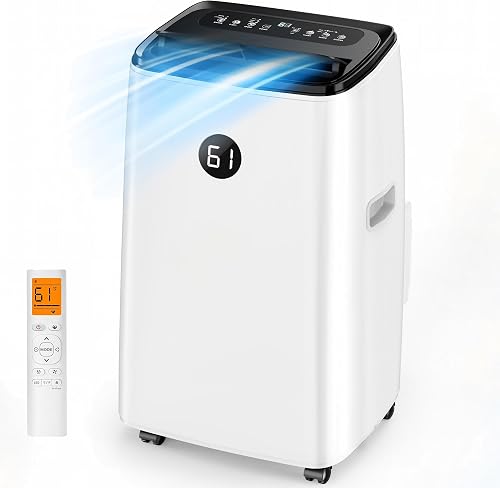 Best for large fifth wheels
DOMANKI 14000 BTU Portable Air Conditioners
8.8/10 our score
See it on Amazon -
3

- 4
 Best for keeping the window viewCheck it
- 5
 Best for small camper bedroomsCheck it
- 6
 Check it
Midea 8,500 BTU portable air conditioner
Best for app and voice control - 7
 Check it
SereneLife 8,000 BTU portable air conditioner with heat
Best for shoulder-season camping - 8
 Check it
Shinco 8,000 BTU portable air conditioner
Best for simple plug-and-play setup
The best portable air conditioners for an RV by camper type
The SereneLife is the best portable air conditioner for an RV overall because it balances size, cooling and simple venting for most campers. The rest of the list solves specific problems: big rigs that need more cooling, small bunks that need quiet, and windows you don't want to block.
SereneLife Portable Air Conditioner: Best for most camper layouts
- 8,000 BTU cooling
- Cooling, dehumidifier and fan modes
- Remote control
- Window exhaust kit included
A narrow floor unit that fits tight camper aisles and ships with everything needed to vent hot air out a sliding window.
Pros
- Slim footprint for camper aisles
- Three operating modes
- Remote control included
Cons
- Single hose design
- No heater mode
SereneLife suits a travel trailer or Class C where the floor space between the dinette and the galley is already tight. At 11.6 in deep and 12.8 in wide, it slips into a corner that most floor units can't reach.
The unit runs on 900W and delivers 8,000 BTU, enough for a cooled living area up to 215 sq ft. Its 1800 cubic foot capacity rating lines up with that same small-to-mid camper footprint.
Three modes cover cooling, dehumidifying and fan. The dehumidifier removes about 1.2 liters of moisture an hour, which matters in a camper where damp air makes the heat feel worse.
The remote lets you change mode, timer and temperature from the bunk without getting up. A 12 foot cord gives you some slack when the nearest outlet is behind a cabinet.
Noise lands at 55 to 57 dBA. That's fine in a living area during the day but noticeable at night in a small trailer.
The window exhaust kit and hose are included and need no drilling. This is the one to buy first if you want a known fit and simple setup.
For a smaller sleeper space, our guide to the best portable air conditioner for a bedroom covers quieter options.
DOMANKI 14000 BTU Portable Air Conditioners: Best for large fifth wheels
- 14,000 BTU cooling
- 700 sq ft coverage
- 48 dB sleep mode
- Self-evaporative system
The most cooling power here, aimed at big rigs and toy haulers that need to drop the temperature fast.
Pros
- Highest cooling capacity in this group
- Quiet sleep mode
- Casters and side handles
Cons
- Heaviest pick at 65 lb
- Single hose design
DOMANKI's 14,000 BTU model is the strongest cooler here, aimed at fifth wheels and toy haulers with a cooled space up to 700 sq ft. The high-efficiency compressor and R32 refrigerant push 277 CFM of airflow, so it drops the temperature faster than the 8,000 BTU units on a hot afternoon.
Its 14,000 BTU ASHRAE rating works out to 10,000 BTU SACC, the stricter number worth comparing against other brands.
Sleep mode quiets the fan to 48 dB and dims the display, which helps when the bedroom is a few feet from the unit. The self-evaporative system sends most moisture out the exhaust hose, so you rarely deal with a bucket.
In very humid weather above 85%, you attach the continuous drain hose. The window seal kit fits sliding windows from 20.5 to 57.3 in, a wide range for camper and home tracks alike.
The trade-off is weight. At 65 lb, this is a two-person move up camper steps.
It measures 13 x 16 x 26 in, so check that it clears your door and aisle before ordering. Choose it for a big rig where cooling speed matters more than a light carry.
DOMANKI 14: Best for dusty campsites
- 14,000 BTU cooling
- 700 sq ft coverage
- 48 dB sleep mode
- Washable filter
A second high-capacity option with a washable filter, useful when you camp where dust and pollen collect quickly.
Pros
- Washable filter
- Sleep mode under 48 dB
- Self-evaporative in normal humidity
Cons
- Deep cabinet at 17 in
- Single hose design
The second DOMANKI unit matches the 14,000 BTU capacity and 700 sq ft coverage but adds a removable washable filter. That suits campers parked near dust, pollen or wildfire smoke, where a filter clogs quickly and needs a rinse every couple of weeks.
A clean filter keeps airflow up, which matters more in a camper than in a house because the unit is working harder against sun-heated walls.
It runs at 52 dB normally and drops under 48 dB in sleep mode. The digital display and 23 ft remote range let you adjust settings from the other end of the trailer.
Auto swing spreads air across the room, and the 24-hour timer lets you pre-cool before you return from a hike. The operating range runs from 61°F to 88°F, so it holds a steady setting through a hot afternoon without cycling off early.
The cabinet is 17 in deep and 14 in wide, deeper than the other DOMANKI, so measure the spot you have in mind. It also weighs 65 lb.
The self-evaporative system handles normal humidity, but in very muggy weather you remove the drain plug and attach the included hose. Pick it when easy filter cleaning matters as much as raw cooling.
Ivation 6: Best for keeping the window view
- 6,500 BTU cooling
- Over-the-sill split design
- Shockproof dampers
- Digital display and sleep mode
The compressor sits outside the window, so camper noise drops and the glass stays usable.
Pros
- Compressor outside the cabin
- Sleep mode and timer
- Light enough for two people to lift
Cons
- Lowest cooling capacity here
- Needs a sturdy window sill
Ivation takes a different approach. The compressor sits outside the window on a sill mount, while the main unit blows cool air inside.
That split design drops cabin noise to 52 dB and keeps the glass usable, so you still get daylight and a view. The saddle mount holds the unit steady over the sill, and shockproof dampers absorb vibration so the frame doesn't rattle.
The 6,500 BTU capacity suits a smaller camper. Three modes cover cooling, dehumidifying and fan.
The digital display reads temperature from 60°F to 86°F, and sleep mode quiets the fan and dims the lights at night. The 24-hour timer and swing function let you schedule a cool-down and spread the air rather than aim it at one bunk.
The catch is the install. The unit needs a sturdy window sill and the included brackets and dampers, and the compressor outside means you need clearance on the exterior side.
It weighs 46.3 lb, light enough for two people to lift into place. Buy it if your camper window is solid and you would rather not give up the view or the quiet.
Uthfy 10: Best for small camper bedrooms
- 10,000 BTU cooling
- 40 dB sleep mode
- 24-hour timer
- Self-evaporative system
The quietest unit in this roundup, with a footprint that slips into a bunk room corner.
Pros
- Quietest sleep mode here
- Light at 45.2 lb
- 24-hour timer
Cons
- Single hose design
- Limited to 450 sq ft
Uthfy is the quietest pick in this roundup, with a 40 dB sleep mode. That makes it the best fit for a bunk room or a small trailer where the AC sits within a few feet of your head.
At that noise level the fan fades into the background, so light sleepers aren't woken every time the compressor kicks in.
It delivers 10,000 BTU for spaces up to 450 sq ft, and its temperature range runs from 61°F to 90°F. The self-evaporative system cuts manual draining in normal conditions, and dual drain ports handle heavy humidity.
A 24-hour timer and remote are included. Safety features include auto-defrost, overheat protection, power-failure memory and a water-full shutoff, plus a 3-minute delayed restart that protects the compressor.
The footprint is small at 11.42 x 12.03 x 27.66 in, and the unit weighs just 45.2 lb, so one person can roll it from the living area to the bedroom. Choose it when quiet sleep is the top priority and your cooled space stays under 450 sq ft.
Midea 8,500 BTU portable air conditioner: Best for app and voice control
- 8,500 BTU cooling
- SmartHome app and voice control
- Washable filter
- 24-hour timer
A compact smart unit for small trailers, controlled from your phone or by voice once you have a hotspot.
Pros
- App and voice control
- Small footprint
- Washable filter
Cons
- Covers only 150 sq ft
- Needs Wi-Fi for smart features
Midea's 8,500 BTU unit is the smart pick. The SmartHome app and Alexa or Google Assistant control let you start cooling before you reach the campsite, as long as your hotspot or campground Wi-Fi is connected.
You can switch modes, set a schedule and check the room from your phone.
It cools up to 150 sq ft, which suits a small trailer, teardrop camper or a single bunk area. The 24-hour timer and digital display handle the basics when you are offline, and the temperature range runs from 62°F to 90°F.
A washable filter protects the coil from dust and pet hair. Its 330 CFM per watt airflow efficiency makes it the most efficient unit here on paper.
The compact body measures 11.54 x 11.61 x 27.76 in. The window brackets fit openings from 26.5 to 48 in, so check your window width first.
Buy it for a small camper where phone control is worth more than extra cooling power.
If you are comparing venting styles, our roundup of the best dual hose portable air conditioners explains why two hoses cool faster than one.
SereneLife 8,000 BTU portable air conditioner with heat: Best for shoulder-season camping
- 8,000 BTU cooling
- Heater mode
- Dehumidifier and fan
- Window mount kit
The only pick with a heater, so it earns its space in a camper used across cool nights as well as hot days.
Pros
- Heat mode for cool nights
- Four operating modes
- Quiet at 53 dB
Cons
- Single hose design
- Lower cooling score than the top pick
SereneLife's 8,000 BTU model adds a heater, which changes the math for campers used in spring and fall. Four modes cover cooling, heating, dehumidifying and fan, so the same unit handles a hot afternoon and a cold night.
That saves the space a second appliance would take in a small camper.
Cooling covers up to 350 sq ft, and the heater mode keeps the cabin usable when the temperature drops. The metal control box adds a safety layer.
Noise sits at 53 dB, a little quieter than the brand's standard unit. The remote, window kit and castors are all included.
It weighs 40.7 lb and measures 13 x 11 x 27.5 in, so it is lighter and easier to move than the 14,000 BTU units.
The heater pulls extra power, so check your pedestal limit before running it alongside other appliances. Pick it for shoulder-season trips when you want one unit to do two jobs.
Our guide to the best portable air conditioner with heat compares more dual-purpose models.
Shinco 8,000 BTU portable air conditioner: Best for simple plug-and-play setup
- 8,000 BTU cooling
- 350 sq ft coverage
- Remote control
- 24-hour timer
A straightforward camper AC with a remote and timer, for buyers who want minimal controls and no smart app.
Pros
- Simple controls
- 59 in exhaust hose included
- 350 sq ft coverage
Cons
- Single hose design
- No smart features
Shinco keeps it simple. There is no app and no smart pairing, just a remote, a 24-hour timer and three modes.
That suits buyers who want to plug in and cool without reading a manual full of settings.
The 8,000 BTU unit covers up to 350 sq ft and runs from 60°F to 86°F. A 59 in telescopic exhaust hose and window sealing kit are included.
The self-evaporative system removes 19.2 liters a day without a bucket. Four casters and a clear LED display round out the basics, and the adjustable air outlet grille lets you aim the airflow at the dinette or the bunk.
Noise runs at 55 dB, which is average for this class. The unit measures 13.46 x 14.69 x 26.93 in.
The 24-hour timer also nudges the target temperature up by 1.8°F every two hours, which avoids overcooling overnight. Buy it if you want the simplest possible camper AC and don't care about smart features or the extra cooling of the 14,000 BTU units.
Read are portable air conditioners worth it if you are still deciding whether a floor unit makes sense for your camper.
How these RV portable air conditioners compare
The top three picks separate by camper size and window setup more than by features. The SereneLife fits the most layouts, the DOMANKI pair handles the biggest rigs, and the Ivation trades cooling power for a clear window and quieter cabin.
| Product | Best for | Cooling power | Size (D x W x H) | Noise | Our score |
|---|---|---|---|---|---|
| SereneLife Portable Air Conditioner | most camper layouts | 8000 BTU | 11.6 x 12.8 x 27.2 in | 55-57 dBA | 9.7 |
| DOMANKI 14000 BTU Portable Air Conditioners | large fifth wheels | 14000 BTU | 13 x 16 x 26 in | 48 dB | 8.8 |
| DOMANKI 14 | dusty campsites | 14000 BTU | 17 x 14 x 27 in | 48 dB | 8.7 |
| Ivation 6 | keeping the window view | 6500 BTU | 17.3 x 13.8 x 8.1 in | 52 dB | 8.4 |
| Uthfy 10 | small camper bedrooms | 10000 BTU | 11.42 x 12.03 x 27.66 in | 40 dB | 7.9 |
| Midea 8,500 BTU portable air conditioner | app and voice control | 8500 BTU | 11.54 x 11.61 x 27.76 in | 7.8 | |
| SereneLife 8,000 BTU portable air conditioner with heat | shoulder-season camping | 8000 BTU | 13 x 11 x 27.5 in | 53 dB | 7.4 |
| Shinco 8,000 BTU portable air conditioner | simple plug-and-play setup | 8000 BTU | 13.46 x 14.69 x 26.93 in | 55 dB | 7.2 |
How we compared these portable ACs for campers
We started with cooling capacity and matched it to typical camper living areas. A travel trailer with 200 sq ft of cooled space needs less BTU than a toy hauler with 500 sq ft, so units were ranked against the campers they realistically fit.
Where a brand listed both an ASHRAE and a SACC rating, we weighed the stricter SACC number more heavily, since that is closer to real cooling delivered.
Next we looked at venting. Most units here use a single exhaust hose and a window kit, and the Ivation vents over the sill through its integrated connecting hose, so none needs a roof cut.
Window fit mattered, since camper windows are smaller and shaped differently from home windows. We checked the bracket ranges where the brands give them, from the Midea's 26.5 to 48 in to the DOMANKI's 20.5 to 57.3 in.
Then we weighed footprint and weight against camper aisles and steps. A 65 lb unit cools harder but is harder to move, while the 40.7 lb SereneLife with heat is easier to shift.
Noise in sleep mode broke ties for bunk-room use. Finally we checked modes and controls, since a camper used year-round benefits from heat or dehumidifying, while a summer-only camper doesn't need them.
What to check before you buy a portable AC for your camper
The right unit is the one that fits your cooled space, your window and your power hookup. Size first, then venting, then noise.
Get those three right and the rest of the spec sheet matters far less.
How much BTU does your camper living space need?
Measure the area you actually cool, not the whole trailer. Multiply the length by the width of the living and sleeping area.
A 20 x 10 ft space is 200 sq ft. Add about 10% for a dark exterior color or a lot of glass.
A 200 sq ft camper sits well with 8,000 BTU. A 450 sq ft space needs about 10,000 BTU.
A 700 sq ft toy hauler needs 14,000 BTU. Oversizing wastes power and can short-cycle the compressor.
A unit that shuts off too soon cools the air but never dries out the camper, so it feels clammy even when the thermostat reads low.
Will the window kit fit your camper window?
Most camper windows are sliding or hinged, and kit brackets are built for sliding tracks. Check the opening width against the kit range.
The Midea fits 26.5 to 48 in, and the DOMANKI fits 20.5 to 57.3 in. A kit that falls short of your window width leaves a gap the hose can't seal.
Hinged windows need a sealed panel to hold the hose. A split sill unit like the Ivation needs a solid sill and exterior clearance for the compressor.
Measure the window and the wall around it before you order. If your window is narrow or oddly shaped, a smaller unit with a telescopic hose is easier to fit than a big cabinet.
Can your campsite power a portable AC?
A 30 amp hookup handles one portable AC at a time. The SereneLife draws 900W and the SereneLife with heat draws 880W.
The 14,000 BTU units pull more, around 2 kWh per night according to DOMANKI. That gap matters when you are paying for power by the night or running a small generator.
Run the AC on shore power or a generator. Solar and battery banks won't sustain a compressor for long.
Check the pedestal breaker before adding a microwave or coffee maker on the same circuit. A soft-start or staggered switch-on helps if the breaker trips when the compressor starts.
Where should the unit sit inside the camper?
Place it near the window it vents through and keep the hose short. A long, kinked hose traps hot air and cuts cooling.
Leave a few inches of clearance around the unit for airflow.
Keep the exhaust away from seating and bunks so hot air doesn't blow back inside. Roll the unit to a corner during the day and toward the bedroom at night if it has casters.
Never vent into a closed storage bay. A hose that dumps into a sealed compartment just circulates the same hot air back into the cabin.
How do you keep the unit quiet at night?
Use sleep mode if the unit has one. The Uthfy drops to 40 dB and the DOMANKI units to 48 dB.
Set the fan lower and aim the louvers away from the bed. Place the unit on the floor rather than a shelf to reduce vibration.
A rubber mat under the casters helps too.
A split unit like the Ivation moves the compressor outside, which keeps cabin noise low during normal cooling. Close the window seal tightly so noise and hot air don't leak around the hose.
If your camper has a thin wall, even a quiet unit carries, so keep it at the far end of the living area when you sleep.
Which portable air conditioner should you buy for your RV?
Buy the SereneLife 8,000 BTU for most campers. It fits tight aisles, covers up to 215 sq ft and installs with the included window kit.
Move up to a DOMANKI 14,000 BTU model if your rig is large or you camp in extreme heat. Pick the Ivation split unit when you want your window view and a quiet cabin.
The SereneLife with heat suits shoulder-season trips, the Uthfy suits quiet bunk rooms, the Midea suits smart-control fans and the Shinco suits buyers who want the simplest setup.
The best portable air conditioner for an RV is the one that fits your cooled space and window without needing a roof cut. Start with size, then venting, then noise.
That order keeps you from buying more cooling than your camper can use or a unit that won't fit through the door.
Our top 3 picks at a glance
-
1
-
2
Best for large fifth wheels
DOMANKI 14000 BTU Portable Air Conditioners
8.8/10 our score
See it on Amazon -
3
Frequently asked questions
What size portable air conditioner does an RV need?
Most travel trailers and Class C campers do well with 8,000 to 10,000 BTU. A large fifth wheel or toy hauler over 300 sq ft needs 12,000 to 14,000 BTU to cool down quickly in direct sun.
Measure your cooled living space, not the whole trailer length, before you choose.
Can you run a portable AC on RV shore power?
Yes, on a 30 amp hookup you can usually run one portable AC alongside normal camper loads. The SereneLife 8,000 BTU unit draws 900W, so check your pedestal and breaker limits before adding other high-draw appliances at the same time.
Where does the exhaust hose go in a camper?
Route the hose out a sliding or hinged window using the window seal kit. Keep the hose short and as straight as you can, because a long kinked hose traps hot air and cuts cooling.
Avoid venting into a storage bay or an enclosed awning space.
Do portable ACs work off RV solar and batteries?
Not for long. A compressor unit like these pulls 900W or more, which drains most camper battery banks in under an hour.
Run the AC on shore power or a generator, and save the battery for fans and lights.
Why do portable ACs need drainage in a camper?
Humidity condenses inside the unit as it cools. Self-evaporative models recycle most of that water, but in muggy weather you attach the drain hose and let it drip outside.
Check the tank before a long trip so it doesn't overflow onto the floor.
Is a portable AC quieter than a roof RV air conditioner?
It can be, especially a split unit like the Ivation with the compressor outside the window. Standard single-hose floor units run around 48 to 57 dBA, which is close to a normal conversation.
Sleep mode drops the DOMANKI and Uthfy units to 48 dB or lower.


