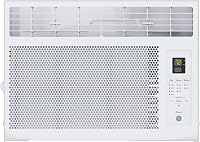
Best Window Air Conditioners for an Apartment
The best window air conditioner for an apartment is the GE Profile ClearView 10,300 BTU inverter model, because its flex-depth design fits walls from 4.5 to 13.75 inches thick and it runs as low as 40 dB. Pick the LG 8,000 BTU for a 350 sq ft living area and the GE 6,000 BTU for a single room up to 250 sq ft.
On this page (11 sections)
- Which window air conditioner is best for an apartment overall?
- How do you size a window AC for a small apartment?
- Which window AC fits an apartment window?
- Which window unit is quietest for apartment living?
- Is a window AC allowed in a rental apartment?
- Which window AC is best for a bedroom in an apartment?
- Which window AC handles a hot, sunny apartment?
- Which window AC saves the most energy in an apartment?
- How do you install a window AC in an apartment without damage?
- How we picked and scored these apartment window ACs
- The verdict: which apartment window AC should you buy?
The best window air conditioner for apartment living cools the room you actually sit in, fits your window without a fight and stays quiet enough for shared walls. The GE Profile ClearView 10,300 BTU inverter wins overall because its flex-depth design handles thick apartment walls and its inverter compressor runs as low as 40 dB.
For smaller budgets, the LG 8,000 BTU covers a living room up to 350 sq ft and the GE 6,000 BTU handles a single room up to 250 sq ft.
This guide focuses on the apartment problems that decide your purchase: window width and sill depth, landlord rules, noise through shared walls and how much of your view you lose. For the broader checklist, our guide to how to choose a window air conditioner covers sizing and installation in more depth.
Which window air conditioner is best for an apartment overall?
The GE Profile ClearView 10,300 BTU is the best window air conditioner for an apartment overall because it solves the two problems renters hit most: thick walls and lost window light. Its flex-depth design expands to fit walls between 4.5 and 13.75 inches thick, so it sits in deep sills that leave most window units hanging or blocked.
The ClearView design also keeps the window view open, so you keep daylight in a small apartment.
It cools up to 450 sq ft, which covers a studio or a large living room. The inverter compressor varies its speed instead of switching on and off, and GE says it is 34 percent more efficient than a standard unit.
At its lowest, it runs at 40 dB, quiet enough to hear a TV over it. Built-in WiFi with the SmartHQ app lets you set a schedule from your phone.
It fits double-hung windows 20 to 40 inches wide with a 13 inch minimum opening height.
The trade-off is weight: 75.7 lb makes it a two-person job, and it costs more than the basic units here. Pick it when your sill is deep or your apartment gets little natural light.
If a standard unit would leave you in shadow all summer, the extra cost buys back your view. For smaller rooms and tighter budgets, the next two picks make more sense.
Pick this one if you can handle the weight and the wall thickness; otherwise pick the LG 8,000 BTU.
How do you size a window AC for a small apartment?
Match BTU to the room you want to cool, not the square footage of the whole apartment. Cooling power runs in rough steps: 6,000 BTU for up to 250 sq ft, 8,000 BTU for about 350 sq ft and 10,300 BTU for up to 450 sq ft.
In an apartment you can usually close doors and cool one room at a time, so a smaller unit works better than its BTU number suggests.
Three factors adjust the estimate. A sunny west-facing room needs more cooling than a shaded one.
Kitchens add heat from cooking. And an open-plan studio needs BTU for the total open area.
Measure each room you plan to cool and buy for the largest one.
The room-size figure assumes an 8 foot ceiling and standard insulation. An attic apartment or a top-floor unit with a hot roof needs a step up in BTU.
A basement apartment with little sun can often get by with less. Choose the BTU band for your main room and let the smaller rooms run cooler on the same unit rather than buying two.
The GE 6,000 BTU covers a bedroom up to 250 sq ft, roughly a 10 by 25 foot space. The LG 8,000 BTU handles a living room up to 350 sq ft, about 14 by 25 feet.
The GE Profile 10,300 BTU reaches 450 sq ft for an open studio. Buy the unit for your biggest room and close interior doors.
Pick 6,000 BTU for one room; pick 8,000 or 10,300 for an open living space.
Which window AC fits an apartment window?
Measure your window opening before you compare models, because fit rules out more apartment units than BTU does. Window air conditioners need a double-hung window, the kind that slides up and down.
Sliding, casement and awning windows usually won't hold a standard window unit.
Width and height set the limits. The GE 6,000 BTU fits windows 27.125 to 36 inches wide and 13.375 inches high minimum.
The GE Profile ClearView fits windows 20 to 40 inches wide with a 13 inch minimum opening height. That wide fit range makes the ClearView the easiest to place in an odd-sized apartment window.
Sill depth matters as much as width. A deep sill or a thick wall can leave a standard unit sitting back from the outside, which reduces airflow and lets rain in.
The ClearView's flex-depth design extends from 4.5 to 13.75 inches to bridge that gap. If your window has a shallow sill, a standard unit with the included side panels is the simpler install.
Check the lease and building rules too. Some buildings require a bracket for upper-floor units or restrict window units entirely.
Pick the ClearView for deep sills and wide fit ranges; pick the GE 6,000 BTU for a standard 27 to 36 inch double-hung window. Measure the opening and read the lease before you order.
Which window unit is quietest for apartment living?
The GE Profile ClearView is the quietest of these three, running as low as 40 dB. That matters in an apartment because a window unit sits in the wall between you and the outside, and its compressor noise reaches neighbors through shared walls and floors.
For reference, 40 dB is about the level of a quiet library. The GE 6,000 BTU runs at 52 dBA on its low fan setting and 56 dBA on high.
The LG 8,000 BTU reaches as low as 53 dB in low mode. Those are normal window-unit levels, fine for most rooms, but a bedroom beside a shared wall benefits from the quieter inverter model.
The ClearView's inverter compressor helps twice. It runs at varying speeds instead of switching fully on and off, so the loudest part of the cycle happens less often.
And it reaches lower fan speeds at low demand. The GE 6,000 BTU and LG use standard compressors that cycle on and off, which you'll hear as a hum and a click at night.
Noise also depends on mounting. A unit that rattles in a loose window frame is louder than its rating suggests, so use the included installation kit and tighten the side panels.
Pick the ClearView if the unit will sit near a bedroom or a shared wall; pick the GE 6,000 BTU or LG 8,000 BTU if the unit goes in a living room where the TV covers the hum.
Is a window AC allowed in a rental apartment?
Often yes, but the lease decides, not the hardware. Many rental apartments allow window air conditioners with landlord approval, while some buildings restrict them on upper floors or ban them in certain window types.
Ask before you buy so you don't pay for a unit you can't install.
Three rules show up in most leases. A bracket may be required for units on upper floors so the unit can't fall.
Window units may be limited to certain rooms or windows, often away from a fire escape. And some buildings ask for a licensed installer or proof of renter's insurance.
If you get approval, keep the install reversible. A window unit that sits in the included side panels and closes against the lower sash comes out without wall damage.
The GE 6,000 BTU and LG 8,000 BTU use a standard window kit that way. The ClearView installs without a bracket where local codes allow, so confirm that your building accepts it first.
If your lease bans window units, a portable air conditioner is the fallback, though it vents through a hose and takes floor space. Pick a window unit only after the building says yes.
The window air conditioner with heat guide covers year-round units if your building allows those.
Which window AC is best for a bedroom in an apartment?
The GE 6,000 BTU is the best fit for an apartment bedroom because it cools up to 250 sq ft and its low fan setting runs at 52 dBA. Most apartment bedrooms fall inside that size, and the lower BTU unit means less cooling power to pay for in a room you mostly sleep in.
The digital thermostat holds a set temperature from 64°F to 86°F, so you can dial in a sleep-friendly number instead of guessing with a dial. The 24-hour programmable timer turns the unit on before you get home or off after you fall asleep, and Auto Restart remembers your settings after a power outage.
Energy Saver Eco mode cycles the compressor to hold the set temperature with less power.
Two-way air direction lets you aim the cool air away from the bed. The unit weighs 38 lb, light enough for one person to lift into a standard double-hung window.
The remote works from across the room, so you don't have to get up to change the fan speed.
For a bedroom bigger than 250 sq ft, step up to the LG 8,000 BTU. Our roundup of the best window air conditioner for bedroom compares more quiet options for sleeping spaces.
Pick the GE 6,000 BTU for a standard apartment bedroom; pick the LG 8,000 BTU if the room is larger or runs warm.
Which window AC handles a hot, sunny apartment?
The LG 8,000 BTU is the better pick for a sunny apartment because the extra 2,000 BTU gives you headroom when afternoon sun heats the room. A west-facing living room or a top-floor unit with a hot roof often needs more cooling than the room size alone suggests.
It cools up to 350 sq ft, roughly a 14 by 25 foot room. Three cooling and fan speeds plus Auto Cool mode let you run high during the hottest hours and drop to low once the room is comfortable.
Four-way air deflection aims the cool air toward the sunny side of the room.
Auto Restart turns the unit back on with your settings after a power outage, which matters in older apartment buildings. The washable filter lifts out for cleaning.
It runs as low as 53 dB in low mode, so it's quiet enough for a living room but not as quiet as the inverter ClearView.
The trade-off is efficiency: the LG uses a standard scroll compressor that cycles on and off, so it works harder than the inverter model in long, hot runs. Pick the LG 8,000 BTU for a sunny living room up to 350 sq ft; pick the ClearView 10,300 BTU if the sunny space is bigger or your electric bill matters more than the upfront cost.
Our guide to how long window air conditioners last explains how to get more years from either unit.
Which window AC saves the most energy in an apartment?
The GE Profile ClearView saves the most energy of the three because its inverter compressor runs at varying speeds and GE rates it 34 percent more efficient. In an apartment where you run the AC through a long summer, that gap adds up on the electric bill.
The ClearView is Energy Star certified and uses about 417.6 kWh per year. The inverter technology is the reason: instead of switching fully on and off, the compressor adjusts its speed to hold the set temperature, which uses less power over long runs.
Built-in WiFi with the SmartHQ app lets you set schedules so the unit runs only when you're home.
The GE 6,000 BTU uses Energy Saver Eco mode to auto-cycle its compressor and reduce power use, and it is rated 12.1 CEER. That's a solid efficiency figure for a small unit.
The LG 8,000 BTU is the least efficient of the three, with a standard compressor and moderate efficiency rating.
The honest trade-off is upfront cost. The ClearView costs more, so the energy savings take time to pay back.
If you run the AC every day from June through September, the inverter model is worth the premium. If you run it a few weeks a year, the GE 6,000 BTU or LG 8,000 BTU keeps the initial spend lower.
Pick the ClearView for heavy daily use; pick the smaller units for short cooling seasons.
How do you install a window AC in an apartment without damage?
Install the unit so it can come out cleanly when you move, using the window kit and no permanent fasteners. A window air conditioner in a rental should sit in the window frame with its side panels expanded and the lower sash closed against it.
That way you remove it at move-out without patching walls.
Start by checking the window type and opening size against the unit's fit range. Clean the sill, set the unit centered in the opening with a slight backward tilt so condensation drains outside, and expand the side panels to fill the gap.
Close the lower sash onto the unit and lock the sash so it can't be opened from outside.
The GE 6,000 BTU includes an EZ Mount kit with expandable side panels. The ClearView's flex-depth design adjusts to the wall thickness and installs without a mounting bracket where local codes allow.
For upper-floor apartments, confirm whether your building requires a bracket before you skip one.
Plan for removal day as well. Keep the kit and hardware together so the next tenant or the landlord gets a complete unit.
Avoid screwing into the frame or sealing gaps with permanent caulk. Pick a unit with a standard window kit for the simplest rental install; pick the ClearView if your wall is thick or your window is oddly sized.
For more setup detail, read how to choose a window air conditioner.
How we picked and scored these apartment window ACs
We compared the three units on the things that decide an apartment purchase: window fit, wall depth, noise, BTU-to-room match and efficiency. Our score weighs specs, features and how well each unit fits what an apartment renter wants.
The scores come from the published specifications and the fit for the apartment use case.
The ClearView scores highest at 8.8 because its flex-depth design and inverter compressor solve the two hardest apartment problems. The LG 8,000 BTU scores 8.5 for its 350 sq ft reach and straightforward controls.
The GE 6,000 BTU scores 8.4 for its low weight and bedroom-friendly noise, with a smaller room size holding it back.
The gap between the three is mostly about fit, not quality. All three cool their rated room sizes and include a remote.
The ClearView's advantages are deep-wall fit and quiet operation. The GE 6,000 BTU's advantage is simplicity and weight.
The LG's advantage is more cooling for a medium living room at a lower cost than the inverter model.
The verdict: which apartment window AC should you buy?
Pick the GE Profile ClearView 10,300 BTU if your apartment has thick walls, a deep sill or a room where you want to keep the view. It is the best window air conditioner for apartment living overall because it fits walls from 4.5 to 13.75 inches and runs as low as 40 dB.
Pick the LG 8,000 BTU for a sunny living room up to 350 sq ft where upfront cost matters more than the lowest energy use. Pick the GE 6,000 BTU for a standard apartment bedroom up to 250 sq ft, especially if you want a light unit you can lift yourself.
Start with your room size and your window opening, then let noise and wall depth decide between the three. If the lease allows a window unit and your sill is deep, the ClearView is the one to buy.
If you have a standard double-hung window and a smaller room, the GE 6,000 BTU does the job for less. For year-round heating and cooling, compare the options in our window air conditioner with heat roundup before you commit.
Frequently asked questions
What size window air conditioner do I need for an apartment?
Match BTU to the room you plan to cool, not the whole apartment. A 6,000 BTU unit covers up to 250 sq ft, while 8,000 BTU reaches about 350 sq ft and 10,300 BTU handles up to 450 sq ft.
Will a window air conditioner fit an apartment window?
Check your window type and opening size before you buy. The GE 6,000 BTU fits double-hung windows 27.125 to 36 inches wide and 13.375 inches high, and the GE Profile ClearView fits windows 20 to 40 inches wide with a 13 inch minimum opening height.
Can you install a window air conditioner in a rental apartment?
Often yes, but read your lease first. A window unit may need landlord approval, and some buildings restrict window units over a certain size or require a bracket for upper-floor windows.
Is a window air conditioner cheaper to run than a portable one?
Usually yes for the same room size. A window unit sits outside the cooled space and vents heat directly outdoors, while a portable unit vents through a hose and often works harder to cool the same area.
Do I need an inverter window air conditioner for an apartment?
Not always, but an inverter compressor runs at varying speeds and saves energy over a standard unit that cycles on and off. The GE Profile ClearView uses inverter technology and is rated 34 percent more efficient.