Should a Window Air Conditioner Vent Be Open or Closed?
Keep a window air conditioner vent closed during normal cooling to limit warm, humid outdoor air from entering. Open it when you want outside air and the weather is comfortable.
On this page (9 sections)
- Should a window air conditioner vent be open or closed while cooling?
- When should you open the window AC vent?
- How can you tell whether a window AC vent is open?
- Can you open a window while the AC is running?
- What should you check before changing the vent setting?
- Which window AC features help with everyday vent use?
- How should you set up and care for a window AC vent?
- What mistakes make the vent setting less useful?
- How do you decide whether the window AC vent should be open or closed?
For window air conditioner vent open or closed, choose closed for normal cooling and open only when you want outside air and the weather is comfortable. Keep nearby windows and exterior doors closed while the AC runs, and check your manual because vent controls work differently across models.
A vent control may be labeled vent, fresh air, or exhaust. Its label and location do not always explain what it does, so confirm its function in the manual before changing it.
Should a window air conditioner vent be open or closed while cooling?
Keep the vent closed for routine cooling. This limits outdoor air from entering while the unit cools and circulates room air.
When outdoor air is hot or humid, opening the vent can add heat or moisture for the AC to manage. Keep the room's windows and exterior doors closed too, since an open window can undermine cooling even when the AC vent is shut.
When should you open the window AC vent?
Open the vent when you want outside air and outdoor conditions are comfortable. This can be useful when you want to refresh the room, but it may make cooling less effective if outdoor air is much warmer or more humid than indoor air.
First check what the control does on your unit. Depending on the design, a vent setting may bring in outside air, exhaust indoor air, or change airflow in another way.
How does the window AC vent open or closed setting work?
The effect depends on the air conditioner's design. A control labeled “open” or “fresh air” may not work the same way on every model.
Check the manual for the vent control's function and instructions. If you can't find the manual, look up the model number on the manufacturer's support site instead of guessing.
How can you tell whether a window AC vent is open?
Look for a lever, slider, or switch on the unit's front or side. Common labels include “open,” “closed,” “vent,” and “fresh air,” though controls vary.
If the unit has no labeled vent control, don't assume it has a fresh-air setting. Check its manual before adjusting a grille or panel, which may serve another purpose.
Can you open a window while the AC is running?
Keep windows and exterior doors closed during normal cooling. Leaving one open lets outdoor air keep entering, so the room may take longer to cool or feel less comfortable.
You can open a window briefly when you want outdoor air and conditions suit you. Close it afterward if you want the AC to cool the room.
If a room isn't cooling well, check its airflow and filter before changing the vent setting. Our guide to why a portable AC may not be cooling covers common airflow and room-condition checks.
What should you check before changing the vent setting?
Confirm the control's purpose in the manual, then choose the setting that fits your goal. Close it for cooling when outdoor air is uncomfortable, and open it only when you want ventilation and conditions allow.
Also check that the unit is installed and sealed as its instructions require. Our guide to how to install a portable air conditioner explains why a well-fitted exhaust setup matters for portable models; window units have their own installation directions.
If you notice water around the unit, check drainage and installation rather than treating the vent setting as a fix. The window air conditioner leaking water guide covers common causes.
Which window AC features help with everyday vent use?
A remote can make it easier to adjust cooling while you leave the vent at the setting you chose. Choose a unit for the room's size and the controls you want; no feature replaces checking the manual for vent operation.
The LG 8,000 BTU window air conditioner is intended for rooms up to 350 sq ft. Its electronic controls and remote suit someone who wants to adjust settings without reaching the unit, while its larger room coverage makes it a poor fit for a small room where a 6,000 BTU model is better sized.
The GE 6,000 BTU electronic window air conditioner is designed for rooms up to 250 sq ft. It suits a bedroom, home office, or small apartment where digital controls, a timer, and a washable filter are useful; skip it if your room is larger than its stated coverage or you need smart-home control.
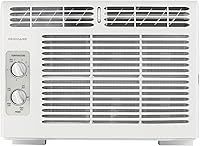
The Frigidaire 6,000 BTU window air conditioner is also designed for spaces up to 250 sq ft. Its three fan speeds, remote, washable filter, and clean-filter alert fit someone who wants reminders for routine care, while its capacity is a mismatch for a larger room.
Choose by room size first, then compare controls and care features. See how to choose a window air conditioner and the window air conditioner sizing and power guide for more help with room fit.
How should you set up and care for a window AC vent?
Set the vent for your immediate goal, then keep the room sealed for cooling. Before use, install the unit according to its manual and confirm that the window panels sit in place as directed.
For routine cooling, close the vent, shut nearby windows and doors, and set the thermostat and fan to your comfort preference. When you want outside air, check the manual, open the vent as directed, and close it again when you return to cooling.
Clean or wash the filter as the manufacturer directs. A dirty filter can restrict airflow, so use any filter reminder as a cue to check it rather than waiting for cooling to weaken.
What mistakes make the vent setting less useful?
The most common mistake is opening the vent during cooling without checking what it does. A control may admit outdoor air or exhaust indoor air, and either effect can change comfort depending on the weather.
Avoid leaving a window open while expecting the room to cool efficiently. Don't force a grille or unlabeled control, and don't use vent changes to solve water leaks, poor installation, or blocked airflow.
How do you decide whether the window AC vent should be open or closed?
Choose closed when your goal is cooling, and open when you want ventilation and outdoor conditions are comfortable. Check the manual first so you know whether your unit brings in outside air, exhausts indoor air, or uses another vent design.
For better cooling, close the vent and keep windows and doors shut. If you need fresh air, use the vent as directed, then return it to closed when cooling matters again.
For a unit choice, match capacity to room size before comparing remotes, timers, or filter alerts.
Frequently asked questions
Should the vent on a window air conditioner be open or closed?
Keep it closed while cooling to recirculate indoor air and limit warm, humid outdoor air from entering. Open it when you want outdoor air and conditions are comfortable.
Vent controls vary by model, so check your manual to confirm what the setting does.
Does opening the AC vent make a room warmer?
It can let warmer or more humid outdoor air into the room, which may make the air conditioner work harder to maintain the set temperature. Close the vent for routine cooling when outdoor air is uncomfortable.
The effect depends on conditions and the unit's design.
Should I open a window when my window air conditioner is running?
Usually, keep room windows and exterior doors closed while cooling to limit outdoor heat and humidity from entering. Open a window briefly when you want fresh air, then close it again if you want the AC to cool the room.
Follow the manual for your unit's vent settings.
What does the vent setting on a window AC do?
A vent setting may bring outdoor air into the room or allow indoor air to circulate, depending on the unit's design. Some models label the control as vent, fresh air, or exhaust.
Check your manual to confirm what each position does before using it.