Portable Air Conditioner vs Window Unit: Which Is Better? (October 2026)
Choose a window unit for steady cooling in one room while keeping the floor clear, or a portable air conditioner if you need to move cooling between rooms. Your window, room size and hose route decide which setup fits.
On this page (10 sections)
- Portable air conditioner vs window unit: which should you buy?
- Which type cools a room more effectively?
- Which one is easier to install?
- Which takes up less usable space?
- What do the controls and daily routines look like?
- Which air conditioner is easier to move?
- Which model fits each kind of room?
- Which is easier to care for?
- What mistakes should you avoid when choosing?
- Which one should you choose for your home?
For the portable air conditioner vs window unit choice, pick a window unit for one regularly cooled room and a portable model when you need to move it. Your window type, floor space and room layout matter as much as the unit's advertised capacity.
A window air conditioner sits in the opening, while a portable model stays on the floor and vents warm air through a hose. Both need an appropriate setup and a size that suits the room.
The GE 6,000 BTU window unit is rated for rooms up to 250 sq ft. The portable options state coverage up to 300 or 400 sq ft, but those figures come from different models and aren't a direct comparison of cooling performance.
 Best for room-to-room moves
Black+Decker 9,000 BTU portable air conditioner
 Best for small fixed rooms
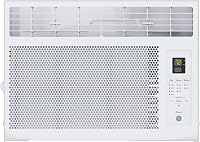
GE 6,000 BTU electronic window air conditioner
Portable air conditioner vs window unit: which should you buy?
Choose a window unit if you have a compatible window and want to cool the same room often. Choose a portable air conditioner if you need to relocate it or can't mount an air conditioner in the window.
A window model is a strong fit for a bedroom, home office or other room with a suitable opening. It keeps the floor clear, but its installed position can affect daylight, curtains and access to the window.
A portable AC works for renters or households that prefer not to leave a cabinet mounted in one window. You can move the unit, but each room needs a usable exhaust opening, and the hose and window kit need to be set up again.
Consider the daily tradeoff, not just the installation day. If you cool one room every afternoon, a fixed window setup may be easier to live with; if your cooling needs shift between rooms, portability can matter more than the floor space it uses.
The GE window model fits specified double-hung windows from 27.125 to 36 inches wide, with at least 13.375 inches of height. The Black+Decker has casters and side handles, while the Midea's adjustable brackets fit openings from 26.5 to 48 inches.
Measure your window before you buy. Our guide to choosing a window air conditioner explains the fit checks that matter for a mounted unit.
Which type cools a room more effectively?
Room size, heat entering the room and a proper installation matter more than the product category alone. Use the stated coverage as a starting point and account for your room's conditions.
The GE is rated for up to 250 sq ft, the Midea for up to 300 sq ft and the Black+Decker for up to 400 sq ft. These are model-specific coverage figures, not proof that portable ACs always cool larger rooms or that window units always cool faster.
Sunlight, ceiling height, insulation, open doorways and heat from appliances can change what a room needs. A room near a sunny roof or with frequent outdoor air coming in may need a different capacity than a shaded, closed room of the same floor area.
Portable units need a clear exhaust path to the outside. Keep the hose connected, avoid sharp bends and fit the window opening as directed so hot exhaust doesn't flow back into the room.
How should you compare portable AC and window unit capacity?
Compare the capacity figures in context, and size the unit for your room before choosing a type. The Midea is rated at 10,000 BTU ASHRAE and 7,100 BTU SACC; the Black+Decker is rated at 9,000 BTU and 5,300 BTU SACC.
The GE window unit is rated at 6,000 BTU. Different ratings and room conditions make a simple number-to-number comparison unreliable as a rule for all portable and window units.
Start with your room's floor area, then account for sun exposure, ceiling height and heat from occupants or appliances. The air conditioner sizing guide helps you work through room size and capacity before comparing specific models.
Which one is easier to install?
A portable unit avoids mounting its cabinet, but still needs an exhaust hose and a window kit. A window unit needs a compatible opening and secure support.
For a portable unit, position it near the window, attach the hose and fit the window kit. The Black+Decker includes an exhaust hose and window parts; the Midea includes a 5 ft hose and adjustable brackets.
The GE includes an installation kit for specified double-hung windows. Measure the width and height before buying, and follow the model's directions for secure installation.
Moving a portable AC means setting it up again. Check that the next room has a workable window, enough hose reach and a safe route that doesn't block a doorway or walkway.
A window unit can be a heavier, awkward object to lift and position, so don't assume installation is a simple solo job. Check the unit's instructions and get appropriate help if you can't safely support it during mounting.
Read how to install a portable air conditioner to see what the hose and window-kit setup involves.
Which takes up less usable space?
A window unit frees floor space, while a portable AC occupies part of the room. Check the appliance footprint and leave room for the airflow path and hose.
The GE measures 16.36 inches wide, 13.38 inches deep and 12.59 inches high. It sits in the window rather than on the floor, though it takes up part of the opening and projects into the room.
The Black+Decker measures 15.3 inches wide, 14 inches deep and 24.8 inches high. The Midea measures 11.61 inches wide, 11.54 inches deep and 27.76 inches high.
A portable unit needs a spot near the window, with enough space for the hose to reach without sharp bends. Mark its footprint and sketch the hose route before choosing a model, especially in a narrow bedroom or office.
A window unit changes how you use that opening. Think about daylight, curtains, window access and whether the window is your usual source of fresh air.
What do the controls and daily routines look like?
Choose the controls you'll actually use, then consider the care they require. A remote helps you adjust settings across the room, while app control only adds value if you want to use your phone.
The GE has a digital thermostat, remote, Energy Saver mode and a 24-hour timer. It isn't WiFi or smart-home compatible.
The Black+Decker remote has a Follow Me feature that lets the remote act as a thermostat. The unit also has fan and dehumidifier modes.
The Midea offers app control, voice-control options and a remote, along with cooling, fan and dehumidification modes. Its 24-hour timer lets you schedule operation, and Midea recommends weekly filter cleaning during use.
A filter that's easy to reach is easier to maintain. Check the care instructions for the exact model, and clean a washable filter as directed so dust doesn't build up and restrict airflow.
Which air conditioner is easier to move?
A portable AC is easier to relocate because it has a portable form, but the next room still needs an exhaust setup. A window unit is designed to stay installed.
The Black+Decker has casters and side handles for moving between rooms. The Midea is portable too, but its hose and window brackets need to be fitted at the new location.
A window model can be removed and installed elsewhere, but it's not convenient for daily moves. Repositioning it means taking it out and securing it in another compatible window.
If you'll cool a bedroom by day and an office later, confirm that both rooms have usable windows and that the hose can reach each one. If you mainly cool one room, the benefit of moving the unit may not outweigh the floor space and repeated setup.
Which model fits each kind of room?
The GE suits a smaller fixed room with a compatible window; the portable models suit people who need mobility or different control options. Treat each model's coverage as a guide, not a promise for every home.
The GE's stated coverage is up to 250 sq ft, which may suit a bedroom, office, dorm or small apartment when the window dimensions work. Its fixed location makes sense for a room you cool regularly.
The Midea is rated for up to 300 sq ft. Consider it if app or voice controls appeal to you and your window opening fits its adjustable brackets.
The Black+Decker is rated for up to 400 sq ft and has casters and side handles for room-to-room movement. Check the room size and exhaust route before relying on that coverage figure.
For a bedroom, think about operating sound, the window's use and where the unit will sit. Our portable AC guide covers portable formats, and portable air conditioners worth considering helps weigh their space and setup tradeoffs.
Which is easier to care for?
Both types need filter care, and portable units may need attention to hose placement and water handling. Follow the model's manual for cleaning and seasonal storage.
The GE has a washable, reusable filter and a reminder indicator. The Midea and Black+Decker also have reusable filters that can be removed for cleaning.
Portable units can collect condensate, so learn how your model handles water before relying on it in a humid room. The Black+Decker describes self-evaporating operation and has a 0.45 L water collection tank for dehumidification mode.
Keep the hose and window-kit parts together if you store a portable model between seasons. For help with water handling, see how to drain a portable air conditioner.
A window unit's filter also needs regular care, and its installation should be checked according to the manual. If you plan to remove it in winter, consider the steps in whether to remove a window AC in winter.
What mistakes should you avoid when choosing?
Avoid buying by BTU alone, skipping measurements or assuming a portable unit works without a window. These shortcuts can leave you with a unit that doesn't fit your room or setup.
First, don't use a coverage figure as a guarantee. Room conditions affect cooling, so consider sunlight, ceiling height, insulation and open connections to other rooms.
Second, measure the window and the unit's available space. A window model must fit and be supported as directed; a portable model needs room for its body, hose and window kit.
Third, don't forget the exhaust route. A hose that is too short, sharply bent or poorly fitted can undermine the setup, and a portable AC can't vent warm air outside without an exhaust opening.
Finally, don't choose a portable unit for mobility if you won't want to repeat the setup in another room. Likewise, don't choose a window model for a room you need to cool in different locations.
Which one should you choose for your home?
Choose a window unit for a compatible window and one room you cool often; choose a portable air conditioner when room-to-room movement or avoiding a mounted unit matters more. The GE fits a small fixed room, the Black+Decker supports movement, and the Midea adds app and voice controls.
Before buying, measure the room, window and available floor area. Match the unit's cooling guidance to the space, then confirm that the cabinet or hose can be installed as directed.
For regular cooling in one room, a window model keeps the floor clear. For changing locations, a portable air conditioner can make sense if each room has a workable exhaust setup.
If you're weighing another way to cool a room, read our portable air conditioner vs swamp cooler comparison.
Black+Decker: Best for room-to-room moves
GE: Best for small fixed rooms
Midea: Best for app-led cooling
Frequently asked questions
Is a portable air conditioner better than a window unit?
A portable air conditioner suits rooms where you need to move cooling or can't mount a unit in the window. A window air conditioner suits a room you cool regularly, if the opening fits and can support installation.
Compare room size, setup and the model's stated coverage before choosing.
Does a portable air conditioner need a window?
These portable air conditioners use a window kit for the exhaust hose. Check the kit's opening range and follow the installation instructions so the hose vents outside and the window gap is fitted securely.
Which type takes up less room?
A window unit keeps its cabinet in the window, while a portable air conditioner takes up floor space and needs room for its hose. Check the window's clearances and the portable unit's footprint, then follow the manual's placement guidance.
Can you move a window air conditioner between rooms?
You can remove and reinstall a window air conditioner, but it's meant to stay mounted while in use. Moving it means installing it in another compatible window.
Which is easier to install, portable or window AC?
A portable AC needs its exhaust hose and window kit fitted, while a window unit needs a compatible opening and secure installation. Measure first, then follow the specific model's instructions for setup and support.